Built from
the inside
out.
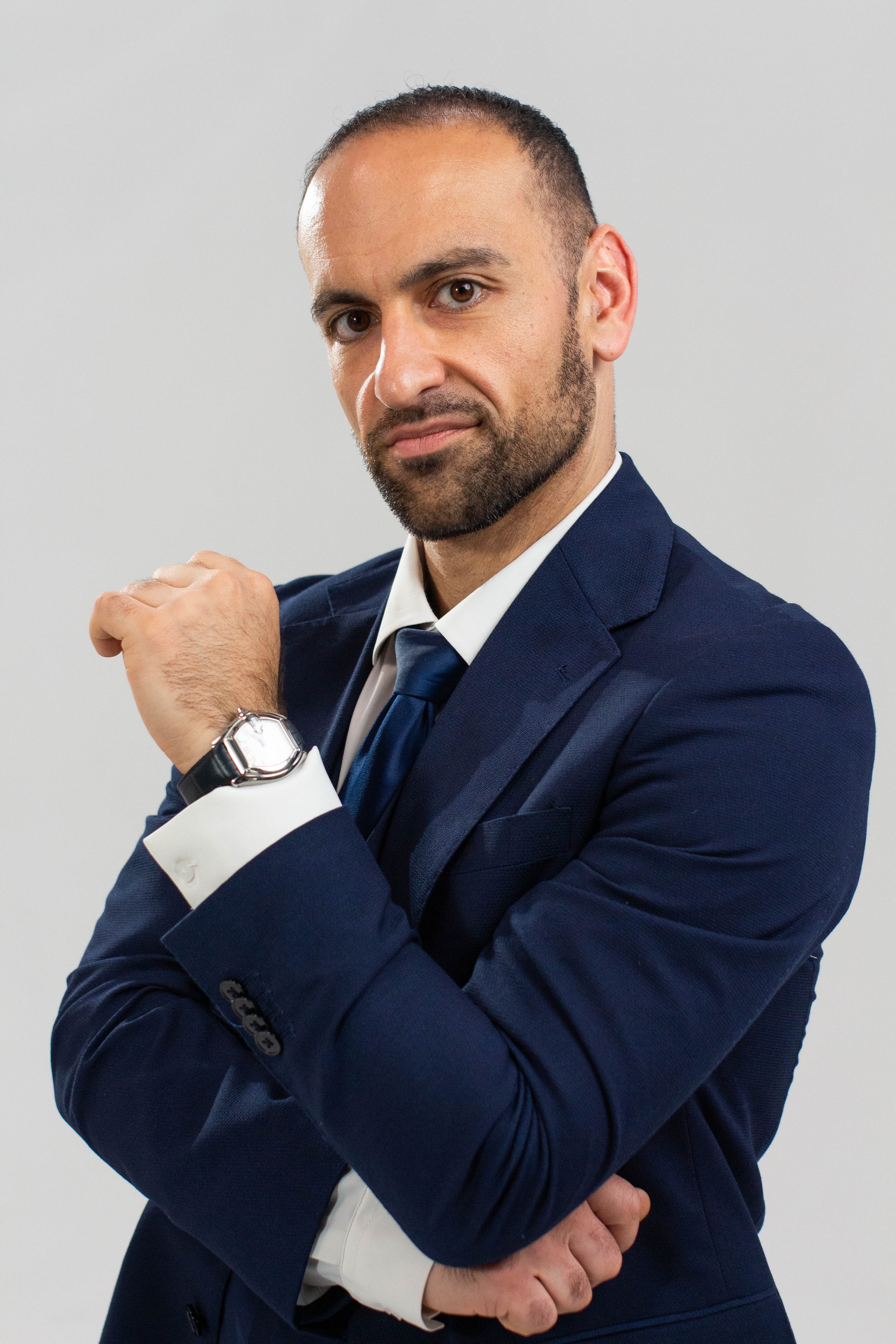
Healthcare executive. Founder. Speaker. Refugee. The biography that matters most isn't the résumé — it's the thread that connects all of it.
Tehran → Vienna → Los Angeles
Alex Yarijanian was born in Iran and came to the United States as a refugee in September 1998. His family fled after he — as a toddler — was confronted by Islamic Republic enforcement for eating ice cream outside during Ramadan. They're Christian, and as a religious minority in Iran, that kind of enforcement carried extra weight.
Before reaching the U.S., the family passed through a refugee transit camp in Austria — a former concentration camp — where people were picking through scraps for food. They were granted asylum and landed at LAX. Alex was motion-sick from the flight. He saw a limousine for the first time in his life, and moments later, a person pushing a shopping cart without a home. Extreme wealth and extreme need, a few feet apart.
That image never left him. It's the thread that runs through everything he's built since — from the nonprofit work with Cardborigami (portable emergency shelters for unhoused individuals) to the populations Carenodes serves: homeless youth, dementia patients, people in addiction recovery. Healthcare access shouldn't depend on how "fundable" or convenient a person looks to an insurer.
"I've never been able to look at scarcity or access to basic needs as somebody else's problem."
Operator
Seven years bootstrapping Carenodes from zero to 48 states. No venture capital. No outside funding. Cash-flow positive from the start. The operational knowledge that comes from absorbing every risk yourself is different from any other kind.
Strategist
Payer contracting, network development, value-based care architecture. Alex has sat on both sides of the table — provider and payer — and built a career translating between them. The gap between what the evidence supports and what gets contracted is almost always a strategy problem.
Speaker
40+ engagements. Health 2.0, HBMA, One Mind Accelerator, and more. The talks are built from operational experience, not frameworks — which is why they land differently with audiences who have been in the room.
Builder
viperOS is the next chapter: a software platform that productizes seven years of payer-contracting playbook — fee schedule benchmarking, underpayment recovery, contract intelligence — so more organizations can access what used to require a team like Carenodes.
Carenodes is a managed services organization that gives healthcare and digital health companies the payer infrastructure they can't build alone: health insurance contracting, network management, credentialing, and compliance — across 48 states plus D.C.
What sets Carenodes apart is that it operates the "how," not just the "what." A lot of healthcare consulting stops at strategy. Carenodes holds the contracts, runs the network, and takes on the operational risk alongside its clients — which is also why it has stayed bootstrapped and profitable rather than chasing a venture-backed growth model.
Seven years. Fully bootstrapped. Cash-flow positive. No venture money. That means Carenodes answers to its patients, providers, and colleagues — not to a fund with a different set of priorities.
Arrived in the U.S. as a refugee from Iran, via a transit camp in Austria. Landed at LAX.
BA Psychology, UC Riverside — Summa Cum Laude.
MS Healthcare Administration, Cal State Long Beach — 4.0 GPA.
Provider side: ran clinics, then managed bundled-payment programs across 14 Southern California hospitals under CMS's BPCI initiative (Dignity Health / HCA).
Humana — VP of Network & Contracting, Western U.S. Reduced Medicare Advantage directory inaccuracy by 37.1%.
Founded Carenodes. Bootstrapped. No outside funding.
Structured a $58M Medicaid savings contract at Mahmee — one of the largest maternal health VBC agreements in California.
Launched the Value-Based Care Accelerator podcast. 52 episodes. Forbes Business Council. Becker's Hospital Review.
Health 2.0 Outstanding Leadership Award + Best Company Award.
Carenodes operates in 48 states + D.C. 134 providers. 51M Americans reached. 66K+ OUD appointments. viperOS in development.
The full story
is on the next page.
Read the six-chapter account of how this all came together — or skip straight to booking a conversation.